Best Flooring for Florida Homes: A Contractor's Guide
The best flooring for a Florida home is luxury vinyl plank with an SPC core or porcelain tile. Both are waterproof, neither absorbs moisture, and both handle the humidity swings that come with cycling between 80 to 90 percent outdoor humidity and 40 to 50 percent air conditioned indoor air. Engineered hardwood is a real option in climate controlled rooms if you want actual wood. Solid hardwood and standard laminate are the two that most often fail here.
That is the short answer, and most flooring guides stop there. The part they leave out is the one that actually determines whether your floor lasts twenty years or two: in Florida, the slab under the floor matters more than the floor. Treasure Coast homes sit on concrete that releases moisture long after the surface looks and feels dry, and a waterproof plank installed over an untested, unlevel slab will still fail. Below is what to install, what to avoid, and why the prep underneath is the decision most homeowners never hear about.
Why Florida Flooring Starts With the Slab, Not the Floor
Nearly every home on the Treasure Coast sits on a concrete slab, and concrete holds and releases moisture for a very long time. A slab can look dry, feel dry, and still be transmitting enough vapor to lift a floating floor, break down an adhesive, or void a manufacturer’s warranty. This is the single most common reason flooring fails here, and it has nothing to do with which plank you picked.
Moisture Testing
Before anything is ordered, the slab should be tested for moisture. It takes about half an hour and it determines whether you need mitigation, which underlayment is appropriate, and whether the product you want is even a candidate. Skipping it is the most expensive shortcut in flooring, because the failure shows up a year later when the warranty conversation has already been lost.
Flatness and Leveling
Slabs settle, and older Treasure Coast homes have had decades to do it. Large format tile is the least forgiving material there is: a slab that is out of tolerance produces lippage, hollow spots, and cracked grout no matter how good the tile setter is. Grinding high spots and filling low ones is not an upsell, it is the part that determines whether the finished floor looks flat.
Vapor Barriers
On a Florida slab, use an underlayment with a built-in vapor barrier even when the flooring manufacturer says it is not required. The added cost is small and the protection against slab moisture transmission is worth it in this climate.
This is why our flooring page leads with the same point: most flooring problems are slab problems. See our [flooring installation → /flooring-installation/] page for how we handle prep.
The Best Flooring Materials for Florida Humidity
Luxury Vinyl Plank With an SPC Core (Best Overall)
Stone polymer composite luxury vinyl plank is waterproof at every layer, not just the surface, and its core cannot absorb moisture. It does not expand and contract with humidity the way wood based products do, it is warmer and softer underfoot than tile, and modern products look convincingly like wood. For most Treasure Coast homes it is the right answer for main living areas, kitchens, and bedrooms. Look for a rigid SPC core rather than a flexible one, and pay attention to wear layer thickness if you have dogs or heavy traffic.
Porcelain Tile (Most Durable and Most Flood-Resistant)
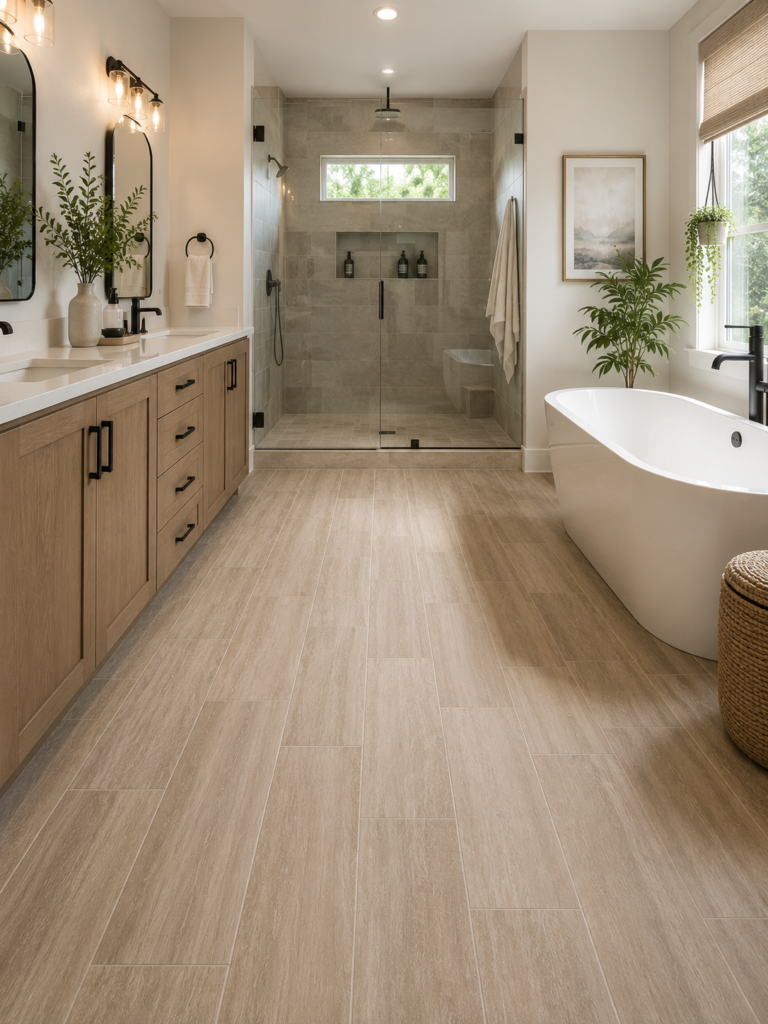
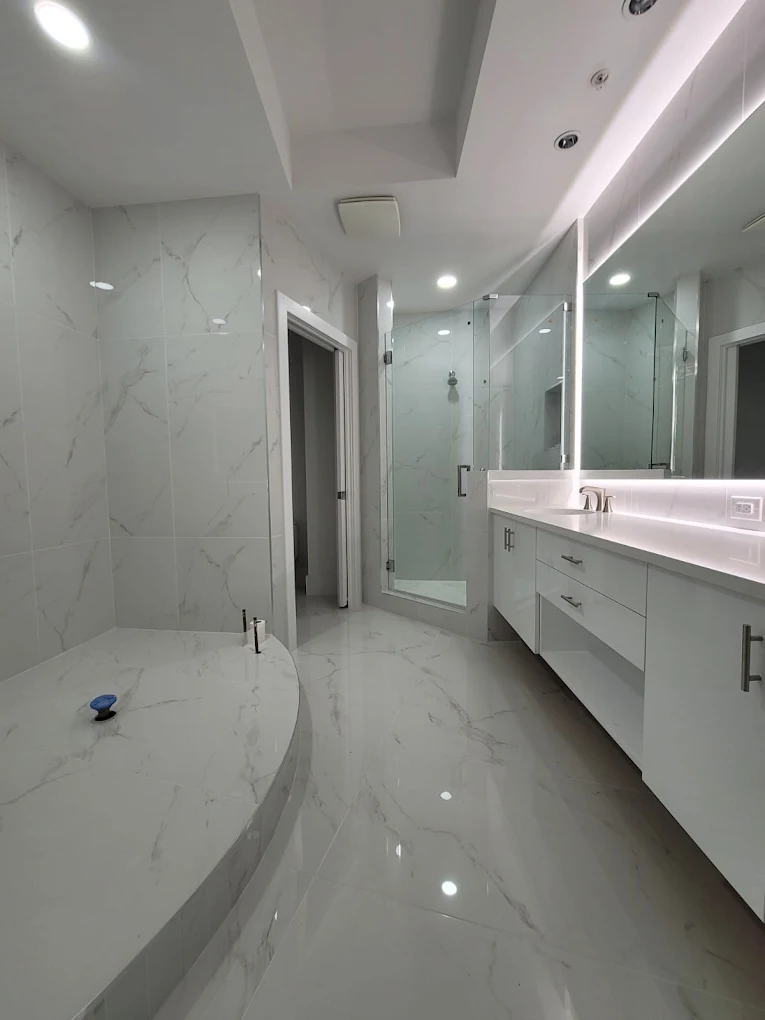
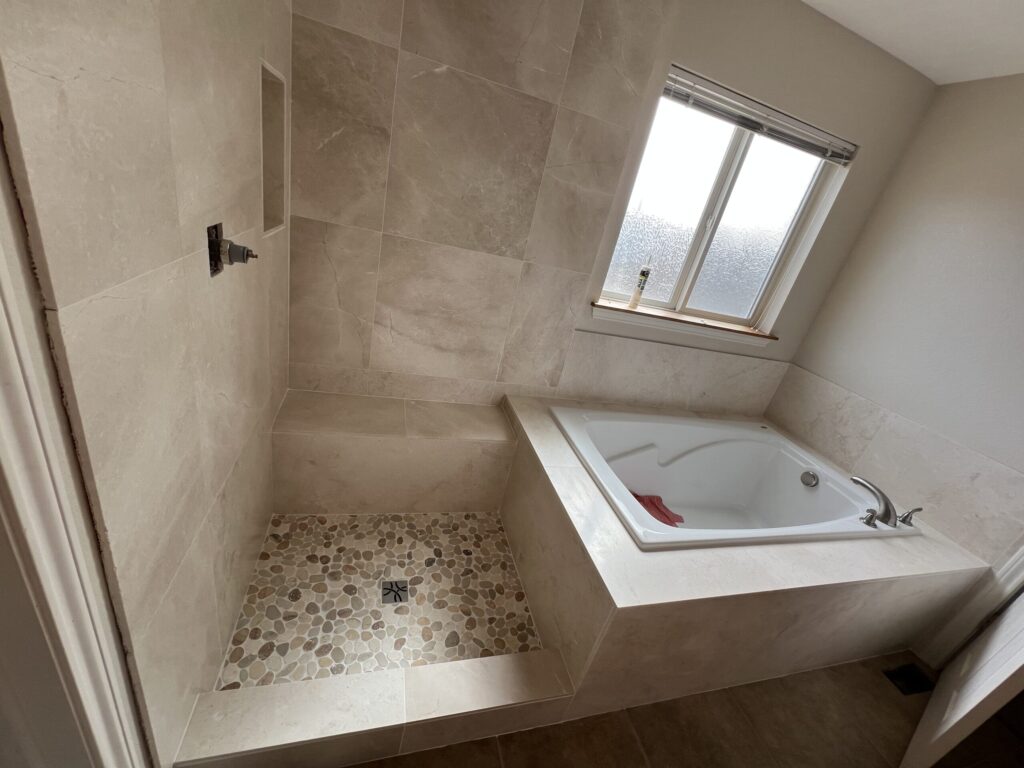
Porcelain is the most moisture stable flooring available and the only common material that typically survives a flood without damage. It handles wet shoes, pool traffic, and sliding doors left open in August. It is harder underfoot and colder than LVP, which matters to some people and not at all to others, and large format porcelain requires a genuinely flat slab. It is the right call for bathrooms, laundry rooms, and anywhere water is a real risk.
Engineered Hardwood (Real Wood That Works Here)
Engineered hardwood is real wood over a dimensionally stable plywood or composite core, and that construction is what lets it work in Florida where solid hardwood struggles. It can be installed over a slab with proper preparation and a vapor barrier, and in a consistently air conditioned interior it performs well. If you want authentic wood in a Treasure Coast home, this is the version to buy. It still needs acclimation before installation and it is not the choice for a bathroom.
Tile That Looks Like Wood
Wood look porcelain plank gives you the appearance of wood with the moisture behavior of tile. It is worth considering for anyone who wants the wood aesthetic in a bathroom, a laundry room, or a house where flooding is a genuine concern.
Material | Waterproof | Over a Slab | Survives a Flood | Best For |
|---|---|---|---|---|
SPC luxury vinyl plank | Yes, at every layer | Yes | Often salvageable | Main living areas, kitchens, bedrooms, condos |
Porcelain tile | Yes | Yes | Yes, typically no damage | Bathrooms, laundry, high water risk, whole home |
Engineered hardwood | No | Yes, with vapor barrier and prep | Usually a total loss | Climate controlled living areas and bedrooms |
Laminate | No, fiberboard core | Yes, with good slab readings | Usually a total loss | Dry bedrooms and offices only |
Solid hardwood | No | Not recommended | Usually a total loss | Above grade only, with managed humidity |
Flooring to Avoid in a Florida Home
Solid Hardwood on a Slab
Solid hardwood absorbs and releases moisture with the ambient humidity, and Florida cycles hard between humid outdoor air and dry conditioned indoor air. Over a concrete slab, where vapor also moves up from below, that stress shows up as cupping, gapping, and buckling. Above grade, in a home with consistently managed humidity, a stable narrow plank species can work. Over a Treasure Coast slab, engineered is the smarter version of the same idea.
Standard Laminate in Wet Areas
Laminate’s core is high density fiberboard, which is a wood byproduct, and when water gets past the seams the core swells. That damage is usually permanent, not repairable. Products marketed as waterproof laminate generally rely on surface coatings rather than a fully waterproof core, so prolonged exposure is still a risk. In a dry bedroom or office with good slab readings, a quality laminate can be a reasonable budget choice. Near a kitchen, a bathroom, a laundry room, or a slider to the patio, LVP gives you a much wider margin for error.
Carpet in Humid, Low-Airflow Rooms
Carpet holds moisture, and in a room without strong air circulation that becomes a mold and odor problem in this climate. It still has a place in bedrooms in some homes, but it is worth thinking about carefully anywhere humidity collects.
LVP vs Laminate in Florida: Which Should You Choose?
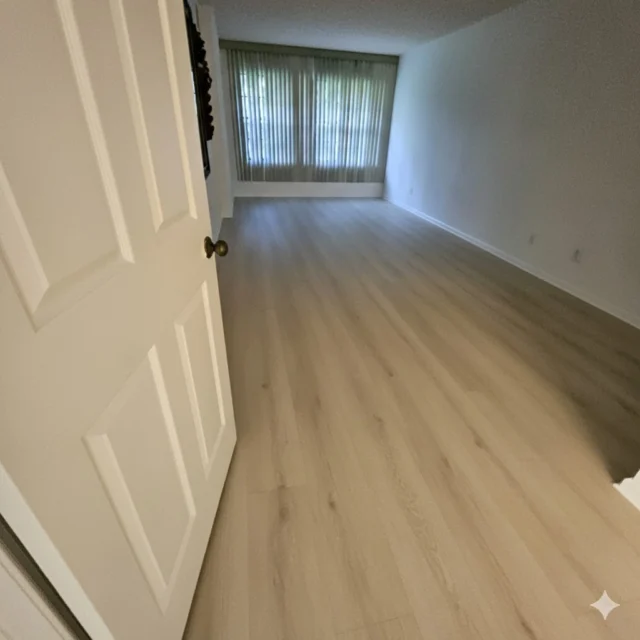
In Florida, choose LVP over laminate almost every time. LVP with an SPC core is waterproof all the way through, while laminate has a fiberboard core that swells permanently once moisture reaches it. Laminate can still make sense in a dry bedroom or home office with good slab moisture readings and a lower budget, but anywhere near a kitchen, bathroom, laundry, or exterior door, LVP is the safer choice.
The two look similar in a showroom and are priced closer than people expect, which is why the comparison comes up constantly. The difference is entirely in the core. LVP’s core is stone polymer composite or PVC, and water does not affect it. Laminate’s core is compressed wood fiber, and water does. Everything else, the wear layer, the printed image, the click lock installation, is broadly comparable.
SPC Luxury Vinyl Plank | Laminate | |
|---|---|---|
Core material | Stone polymer composite | High density fiberboard (wood based) |
Water exposure | Waterproof through the full thickness | Swells once water passes the seams |
Damage when wet | Generally none | Usually permanent |
Best rooms | Anywhere, including wet areas | Dry bedrooms and offices |
Florida verdict | The safer specification | Workable in the right room only |
The honest version: in a Florida home where sliders get left open, wet shoes come in from the pool, and afternoon storms are routine, the wider margin for error is worth the difference in price. That is not a knock on laminate as a product. It is a statement about the environment it is being asked to live in.
Best Flooring by Room for a Treasure Coast Home
Room | Best Choice | Why |
|---|---|---|
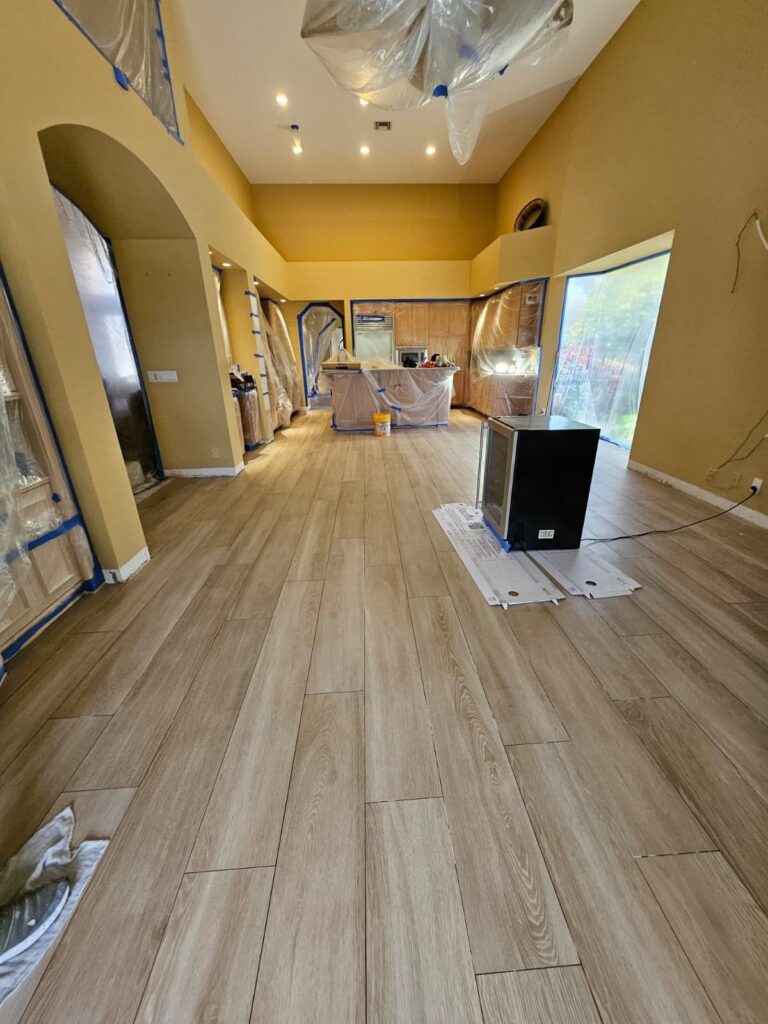
Main living areas | SPC luxury vinyl plank | Waterproof, warm underfoot, continuous look across the house |
Kitchen | LVP or porcelain tile | Water risk from appliances and sinks |
Bathrooms | Porcelain tile | Highest water exposure; tile is the only material that shrugs it off |
Laundry room | Porcelain tile | Supply line and washer failures are common and destructive |
Bedrooms | LVP, or engineered hardwood if climate controlled | Low water risk; comfort and quiet matter more |
Condos | LVP or tile with rated underlayment | The association’s sound rating requirement governs the assembly |
Lanai or garage | Porcelain rated for the application, or coated concrete | Unconditioned spaces swing too far for interior flooring |
Running the same flooring continuously through the main living areas is one of the highest impact choices in a remodel, and it is far cheaper done all at once than room by room, because the slab prep, transitions, and baseboards all happen in one pass.
What Makes Florida Flooring Installation Different
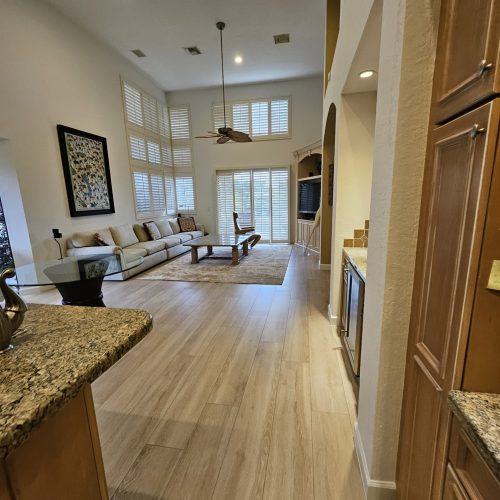
Three things matter more here than almost anywhere else.
Acclimation
Wood based products, including engineered hardwood and laminate, need to sit in the home and adjust to its temperature and humidity before installation. Skipping acclimation is one of the most common causes of early buckling and gapping.
Expansion Gaps
Floating floors need room to move at the perimeter. Gaps that are missing, closed up by baseboard, or blocked by a heavy cabinet run are a frequent cause of buckling, and it usually shows up months later.
Consistent Air Conditioning
A home that sits unconditioned for months, which is common with seasonal and rental properties on the Treasure Coast, puts wood based flooring through humidity swings it was never designed for. In those homes, LVP and porcelain are the safer specification regardless of budget.
Choosing Flooring for a Port St. Lucie or Treasure Coast Home
Homes here share a specific set of conditions. They sit on slabs, most were built between the 1970s and the early 2000s, and those slabs have had decades to settle. Coastal properties in Stuart, Jensen Beach, and on Hutchinson Island add salt air, which is hard on transitions, trim, and any exposed metal, and seasonal homes add long unconditioned stretches.
That combination is why LVP and porcelain dominate here and why the prep underneath matters as much as the product on top. It is also why we test and prepare the slab as part of the scope rather than as an add on discovered mid project.
Florida Flooring Questions, Answered
What is the best flooring for Florida humidity?
Luxury vinyl plank with an SPC core is the best all around choice for Florida humidity, because it is waterproof at every layer and its core cannot absorb moisture. Porcelain tile is the runner up and the most flood resistant option available. Both handle the swing between humid outdoor air and dry air conditioned indoor air without expanding, contracting, or cupping.
Can you install hardwood flooring on a concrete slab in Florida?
Engineered hardwood can be installed over a concrete slab with proper moisture testing, a vapor barrier, and correct preparation. Solid hardwood generally should not be, because slab moisture moves upward and Florida’s humidity cycling causes solid wood to cup, gap, and buckle. If you want real wood over a slab on the Treasure Coast, engineered is the version that works.
Is LVP or laminate better for a Florida home?
LVP is better for almost every Florida application. LVP with an SPC core is waterproof all the way through, while laminate has a high density fiberboard core that swells permanently once water reaches it. Laminate can work in a dry bedroom or office with good slab readings and a tighter budget, but near kitchens, bathrooms, laundry rooms, or exterior doors, LVP is the safer choice.
Does a concrete slab need to be tested before installing flooring?
Yes, and it is not optional. Florida slabs release moisture long after the surface looks and feels dry, and that vapor can lift a floating floor, break down adhesive, or void a manufacturer’s warranty. Moisture testing takes about half an hour and determines whether mitigation is needed and which products are candidates.
What flooring survives a flood best?
Porcelain tile is the most flood resistant flooring available and typically survives with no damage to the floor itself. SPC luxury vinyl plank is often salvageable. Solid hardwood, engineered hardwood, and laminate are usually total losses after a flood, because their cores are wood based.
How long does flooring last in a Florida home?
Porcelain tile lasts the longest, commonly decades, and is often outlived only by the house. Quality SPC luxury vinyl plank typically lasts fifteen to twenty five years depending on wear layer thickness and traffic. Engineered hardwood can last decades and can sometimes be refinished once. Laminate and solid hardwood have the shortest practical lifespans in this climate, because moisture, not wear, is usually what ends them. In every case, slab preparation affects lifespan more than the product warranty does.
How much does flooring installation cost in Port St. Lucie?
Installed cost depends on the product, the square footage, and how much slab preparation the home needs, and prep is the variable most homeowners do not budget for. Grinding, leveling, and moisture mitigation can meaningfully change the number. Every estimate we provide is free and specific to your home, and we assess the slab before quoting.
What flooring do condo associations allow?
Most Florida condo associations require hard flooring to meet a minimum sound transmission rating, listed in the condo documents as an STC or IIC number, which usually means an approved underlayment beneath tile or LVP. The rating applies to the whole floor assembly rather than the plank alone, so confirm the requirement and document the assembly before ordering.
Get a Free Flooring Estimate on the Treasure Coast
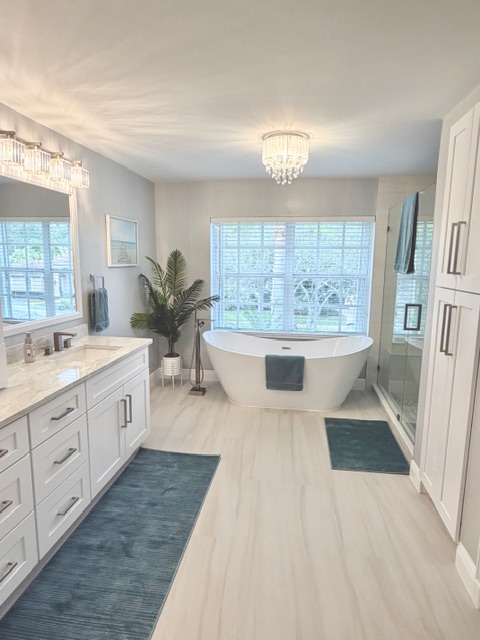
The right product matters, and the slab underneath it matters more. Elite Home Improvements Group is a licensed Florida general contractor (CGC1529124) that tests and prepares the slab as part of every flooring project, not as a surprise mid job. Compare LVP, porcelain, and tile in person at our Port St. Lucie showroom, or call (772) 666-3459 for a free in home estimate anywhere on the Treasure Coast.